Posted on February 9, 2026 by Rebekah Alegria
What drives a student’s choice of college major? For some, it’s passion. For others, it’s job prospects. But what if marriage expectations also played a role?
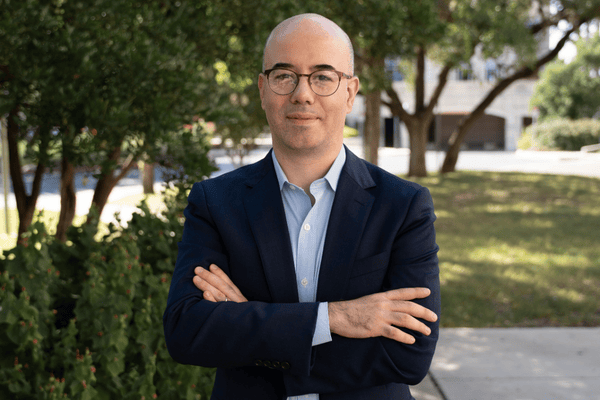
Alper Arslan, assistant professor of economics at the Carlos Alvarez College of Business.
Alper Arslan, assistant professor of economics in the Carlos Alvarez College of Business, explores this surprising topic in a research study recently presented at the Econometric Society World Congress in Seoul.
The study analyzes the impact of hard-to-measure personal factors, like expectations around marriage, on educational and life decisions.
Using data from the National Longitudinal Survey of Youth, Arslan and his co-authors developed a novel econometric method to test whether unobservable influences affect both major selection and future marital outcomes.
Their analysis found that students do, in fact, consider potential marriage prospects when deciding what to study – particularly when majors are shaped by traditional gender roles and long-term economic stability.
For example, the study revealed that women with higher expectations of marrying within five years were more likely to choose education and less likely to pursue business as a major. While expected earnings remained the strongest predictor of major choice overall, the influence of marriage prospects was more pronounced among women, highlighting key gender differences in how students weigh personal and professional priorities. “As empirical researchers, we’re often challenged by the difficulty of measuring unobservable factors that shape real-world decisions,” said Arslan, an inaugural Alvarez Research Fellow.
“Our study introduces a practical test for identifying whether such hidden influences affect both choices and outcomes, like major selection and eventual marriage. While we focused on marriage expectations, the method is broadly applicable to many other settings where unobserved factors play a role.”
Alper Arslan, Assistant Professor of Economics, Alvarez Research Fellow

The implications are both economic and cultural. The study, the first of its kind to provide empirical evidence linking marriage expectations to college major decisions, sheds light on how societal norms can quietly shape academic and career trajectories, even in fields like business that are often viewed through a purely professional lens.
With research interests in market design, econometrics and labor economics, Arslan has published in top journals including Management Science, Manufacturing & Service Operations Management and the Journal of Operations Management.
In addition to his work on education and labor economics, Arslan has explored a wide range of applied research topics across economics and operations including a recent study that analyzed the effects of variable pricing strategies in the NFL ticket market.
— Rebekah Alegria
Share this story: